
Concussion and brain injury care, guided by a brain map
When focus, mood or sleep still haven’t recovered months after a concussion or brain injury, we look at how the brain is working now. A qEEG shows which networks are affected, and we plan gentle, non-invasive TMS and therapy around it.
Prefer to write? Request a consultation or verify your insurance.
When symptoms don’t clear
Most people recover from a concussion within weeks. Some don’t. Months later they still lose focus halfway through the day, forget things, snap at people they love, or can’t sleep. Scans often come back normal, which can leave people feeling that nothing is wrong when clearly something is.
Brain-mapped care starts by measuring how the brain is working today.
What a brain map can show
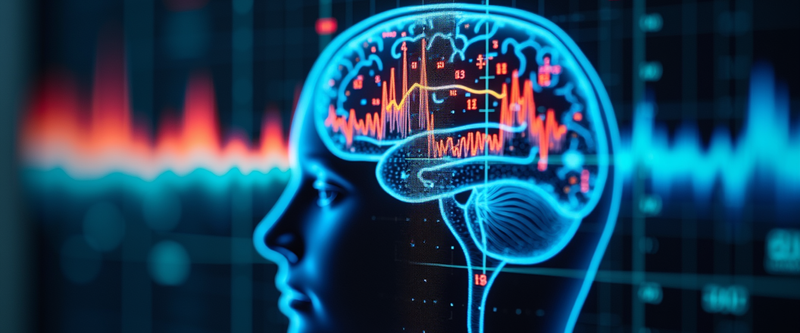
A qEEG records the brain’s electrical activity and compares it with people the same age. After a brain injury, maps often show slowed rhythms or regions that have stopped working in step. A qEEG doesn’t replace a neurologist’s evaluation or imaging, and it doesn’t diagnose an injury.
What it gives us is a picture of which networks to support, and a baseline to measure recovery against.
How TMS is used
TMS uses magnetic pulses to change activity in targeted parts of the brain. We choose the site and settings from your map and symptoms, start conservatively, and repeat the map during care to check what is changing.
What the research says
TMS is not FDA-cleared for brain injury, so using it this way is off-label. Studies of TMS for lingering concussion symptoms and for depression after brain injury have been small but encouraging, and larger trials are needed. Depression is an FDA-cleared use of TMS, and it is common after a brain injury.
Safety comes first
TMS has been used in clinics since 2008. The common side effects are mild: scalp discomfort where the coil rests, a headache, or tiredness after a session. They usually ease within the first week or two.
Seizures are rare. TMS isn’t suitable for people with metal or an implanted device in or near the head, such as an aneurysm clip or a cochlear implant. Dental fillings and braces are fine. We review your full history before recommending treatment.
A brain injury can raise the risk of seizures, so we review your injury, imaging, medications and history carefully before recommending TMS, and we keep settings conservative.
A recent head injury needs a doctor first. Call 911 or go to the emergency room for a worsening headache, repeated vomiting, confusion, a seizure, slurred speech or weakness on one side.
Working with your care team
We coordinate with your neurologist, primary care doctor, therapists and, for students, school or athletic staff. Psychotherapy at our clinic can help with mood, frustration and the adjustment that comes with a slow recovery.
Last updated October 2026.
Questions about tbi treatment
Is TMS FDA-approved for brain injury?
No. Using TMS after a brain injury is off-label. TMS is FDA-cleared for depression, which is common after a brain injury.
How soon after a concussion can I start?
Most concussions improve on their own over a few weeks, so we usually see people whose symptoms have lasted longer. Your doctor should evaluate any recent injury first.
Is TMS safe after a brain injury?
A brain injury can raise seizure risk, which is why we review your history and imaging before recommending treatment and use conservative settings. For some people TMS isn’t appropriate, and we’ll tell you if that’s the case.
Do you see student athletes?
Yes. We see people of different ages and coordinate with schools and athletic staff when that helps.
Will insurance cover it?
Coverage varies. It is most likely when depression is part of the picture. We verify your benefits before treatment. We work with Blue Cross and Blue Shield of Illinois, UnitedHealthcare, Cigna and Aetna.
TBI care for Chicago and the suburbs
Our one clinic is in Lombard, a short drive from most of DuPage County and reachable from Chicago and the south suburbs by I-88, I-355 and I-294.
Call our office
We’ll answer your questions, check your insurance benefits and help you decide whether a brain map is the right next step. Our team answers the phone during clinic hours.
Prefer to write? Request a consultation or verify your insurance.