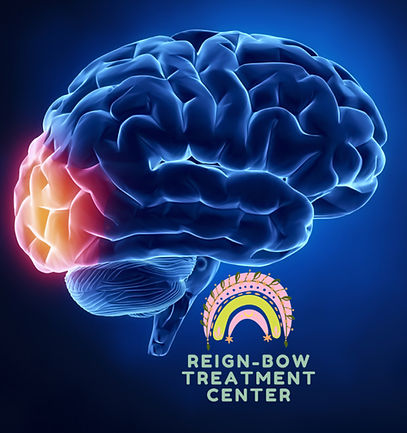

What Is Brain Mapping for Autism?
- May 9
- 4 min read
Understanding qEEG Brain Mapping and How It May Help Families Find Answers
When a child struggles with attention, emotional regulation, communication, sleep, sensory overload, or repetitive behaviors, many parents are told the same thing:
“It’s autism.”
But what many families are not told is that every child on the autism spectrum has a unique pattern of brain activity.
That is where brain mapping, also known as qEEG brain mapping, is becoming one of the most talked-about tools in modern neuroscience-based autism care.
At Reign-Bow Brain Treatment Center, we use advanced brain mapping technology to better understand how the brain is functioning — helping families move beyond guesswork and toward more personalized care.
What Is Brain Mapping?
Brain mapping is a non-invasive process that measures electrical activity in the brain using a test called a quantitative electroencephalogram (qEEG).
During the process:
Sensors are placed on the scalp
Brainwave activity is recorded
Data is analyzed using advanced software
The results are compared to age-based normative databases
This creates a visual map of how different areas of the brain are functioning.
Unlike a traditional EEG that mainly looks for seizures, qEEG evaluates patterns connected to:
Attention
Emotional regulation
Sleep
Processing speed
Sensory integration
Executive functioning
Anxiety patterns
Brain connectivity
How Does Brain Mapping Relate to Autism?
Autism is not a one-size-fits-all condition.
Many individuals on the spectrum may experience differences in:
Brainwave speed
Connectivity between brain regions
Overactive or underactive areas
Sensory processing
Emotional regulation networks
Research has shown that some individuals with autism may display:
Excess slow-wave activity (delta/theta)
Irregular connectivity patterns
Dysregulation in frontal or temporal lobes
Imbalances affecting focus, speech, sleep, or behavior
Brain mapping helps identify these patterns visually and objectively.
This is important because two children with the same diagnosis may have very different neurological activity.
Why Parents Are Searching for Brain Mapping for Autism
Many families searching for:
“Autism brain scan”
“Brain mapping for autism near me”
“qEEG for autism”
“How to help autism naturally”
“Brain-based autism therapy”
are looking for answers beyond symptom management.
Parents often want to know:
Why meltdowns happen
Why speech fluctuates
Why sleep is disrupted
Why focus changes day to day
Why certain therapies work for one child but not another
Brain mapping provides data that may help explain those patterns.
What Happens During a qEEG Brain Map?
At Reign-Bow Brain Treatment Center, the process is designed to be calm, supportive, and family-friendly.
Step 1: Initial Consultation
We discuss:
Developmental history
Current concerns
Sleep patterns
Emotional regulation
Attention challenges
Sensory sensitivities
Previous therapies
Step 2: qEEG Recording
A cap with sensors is placed on the scalp.
The child sits comfortably while brainwave activity is recorded.
The process is:
Non-invasive
Painless
Drug-free
Radiation-free
Most brain maps take approximately 30–60 minutes.
Step 3: Data Analysis
The brainwave information is processed into visual maps showing patterns across different brain regions.
These maps may identify areas associated with:
Hyperactivity
Emotional dysregulation
Slow processing
Anxiety patterns
Attention difficulties
Connectivity concerns
Step 4: Personalized Recommendations
The results may help guide personalized recommendations based on the individual’s unique brain activity patterns.
What Are Brainwaves?
The brain communicates using electrical activity called brainwaves.
Different brainwaves serve different purposes.
Delta Waves
Associated with deep sleep and restoration.
Excessive delta activity during waking hours may sometimes be linked to:
Brain fog
Slower processing
Fatigue
Attention difficulties
Theta Waves
Associated with creativity and relaxation.
Too much theta activity may correlate with:
Distractibility
Inattention
Difficulty staying engaged
Alpha Waves
Associated with calm focus and relaxed awareness.
Beta Waves
Associated with active thinking and concentration.
Imbalances may contribute to:
Anxiety
Hypervigilance
Difficulty calming down
Can Brain Mapping Diagnose Autism?
Brain mapping alone does not diagnose autism.
Autism diagnoses are typically made using:
Developmental assessments
Behavioral evaluations
Clinical observations
However, qEEG brain mapping may provide additional insight into how the brain is functioning.
Many families appreciate having objective neurological data alongside traditional evaluations.
Potential Benefits of Brain Mapping for Autism
Families often explore brain mapping because it may help provide:
A More Personalized Understanding
Instead of treating autism as identical in every child, brain mapping looks at the individual brain.
Objective Data
Parents can visually see patterns in brain activity.
Progress Tracking
Some clinics use repeat brain maps to track changes over time.
Guidance for Therapy Planning
Brain mapping may help guide individualized approaches.
Why Families Are Turning Toward Personalized Neuroscience
The autism community is increasingly interested in neuroscience-based approaches because many families feel traditional approaches alone do not fully address underlying neurological patterns.
Searches for:
“brain-based autism therapy”
“personalized autism treatment”
“qEEG autism therapy”
“neurotherapy for autism”
“autism brainwave treatment”
have increased significantly in recent years.
Parents today want:
Data
Personalization
Transparency
Objective tracking
Whole-child approaches
Questions Parents Commonly Ask
Is brain mapping safe?
Yes. qEEG brain mapping is non-invasive and does not use radiation.
Does brain mapping hurt?
No. The process is painless.
How long does it take?
Most appointments range from 30–60 minutes depending on the child’s tolerance and needs.
Can young children do brain mapping?
Many clinics work with children of different ages, though cooperation levels vary by child.
Why Families Choose
At Reign-Bow, we focus on:
Personalized neurological insights
Compassionate family-centered care
Advanced qEEG technology
Data-driven approaches
Individualized treatment planning
We understand that every child’s brain is unique — and families deserve more than a one-size-fits-all approach.
Final Thoughts: Understanding the Brain Beyond the Diagnosis
Autism is complex.
Behind every behavior is brain activity, sensory processing, emotional regulation, and neurological communication patterns that are unique to the individual.
Brain mapping gives families a closer look at those patterns.
For many parents, it becomes the beginning of understanding not just the diagnosis — but the child behind it.
Frequently Asked Questions About Brain Mapping for Autism
What is qEEG brain mapping for autism?
qEEG brain mapping is a non-invasive assessment that records brainwave activity to analyze patterns that may relate to focus, sensory processing, emotional regulation, and other neurological functions.
Is brain mapping covered by insurance?
Coverage varies depending on the provider and plan. Families should contact their insurance company for specific benefit information.
What age should a child get brain mapping?
Children of many different ages may undergo qEEG brain mapping depending on their ability to participate in the recording process.
Can brain mapping help with ADHD and anxiety too?
Brain mapping is commonly explored for concerns involving attention, emotional regulation, sleep, anxiety, and cognitive functioning.
Where can I get brain mapping for autism near me?
Families searching for brain mapping for autism in Illinois can learn more through Reign-Bow Brain Treatment Center.



Comments