🧠 Does Laser Therapy Help Autism? What Parents Need to Know
- 3 days ago
- 3 min read
Learn how laser therapy may support children with autism, including benefits, safety, and how personalized brain-based approaches can improve outcomes.
🧠 Understanding Autism and the Brain
Autism is not just behavioral—it is neurological.
Many children on the autism spectrum experience differences in:
Brain wave activity (such as elevated delta waves)
Communication between brain regions
Regulation of attention, emotion, and sensory input
Because of this, many families begin exploring brain-based therapies that go beyond traditional behavioral approaches.
One of the options that has gained attention is laser therapy for autism.
💡 What Is Laser Therapy for Autism?
Laser therapy (often referred to as low-level laser therapy or photobiomodulation) uses light energy to stimulate brain activity.
The goal is to:
Support cellular function
Improve blood flow
Encourage more balanced brain activity
It is:
Non-invasive
Drug-free
Typically well-tolerated
📊 Does Laser Therapy Help Autism?
The honest answer:
👉 It may help some children—but results can vary.
For parents seeking alternatives to medications or therapies that haven’t worked, this can feel like a promising option.
Some families report improvements in:
Focus and attention
Communication attempts
Emotional regulation
Sleep patterns
However, outcomes are not always consistent.
Why?
Because many approaches—including standard laser therapy—are often:
Generalized (same protocol for every child)
Not based on each child’s unique brain activity
Missing ongoing tracking and adjustments
And that’s where results can plateau.
⚠️ The Missing Piece: Personalization
Autism is highly individualized.
No two brains are the same.
A treatment that is not tailored to:
Brain wave patterns
Neurological imbalances
Functional connectivity
…may only deliver partial results.
This is why many families start asking:
👉 “Is there a more personalized approach?”
A More Advanced Approach: Brain-Based, Data-Driven Treatment
At Reign-Bow Brain Treatment Center, the focus is not just on stimulation—but on precision.
Instead of applying a one-size-fits-all method, treatment is guided by:
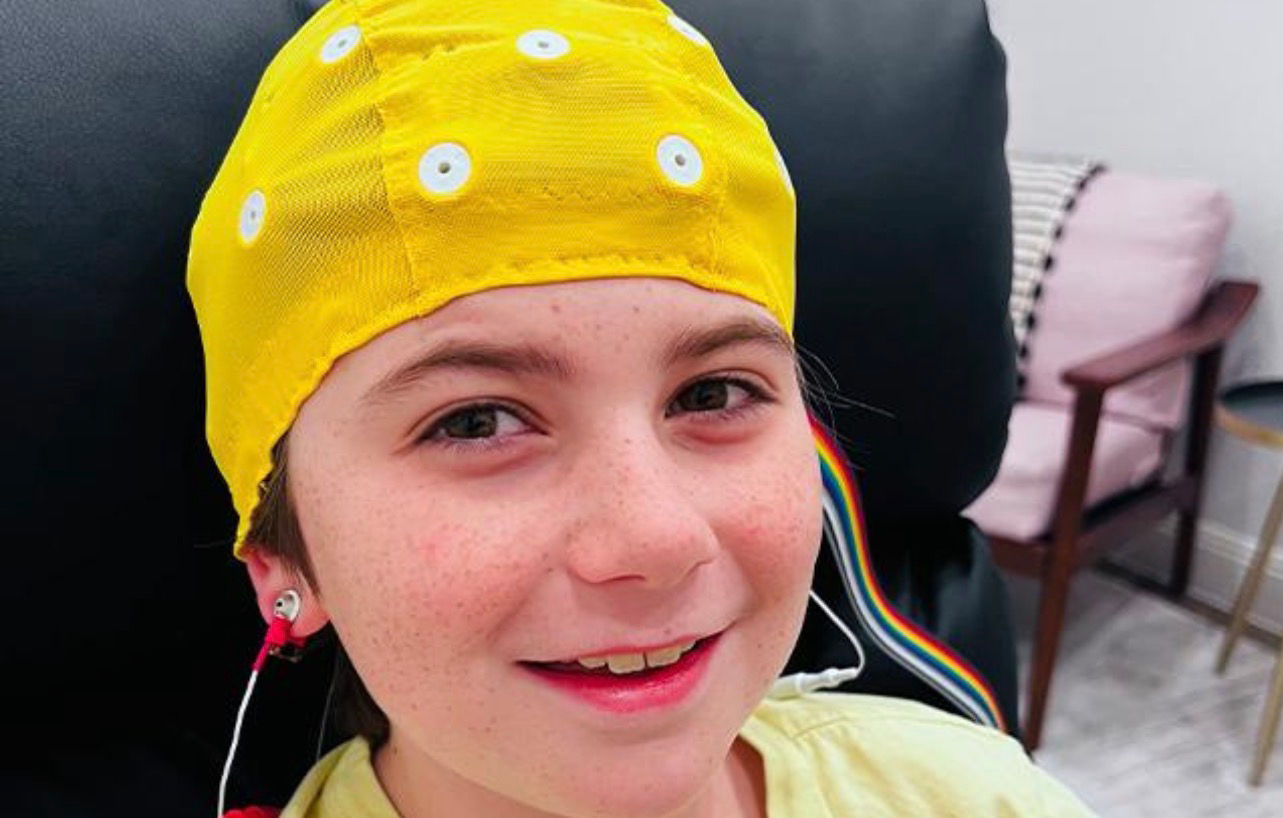
🔍 qEEG Brain Mapping
A detailed analysis of your child’s brain activity to identify:
Overactive or underactive regions
Imbalances in brain waves
Connectivity challenges
🎯 Targeted Brain Stimulation
Protocols are adjusted based on:
Your child’s specific brain patterns
Their symptoms and goals
Ongoing response to treatment
📊 Continuous Progress Tracking
Families are not left guessing.
Progress is monitored through:
Behavioral changes
Parent feedback
Measurable brain-based indicators
🌟 Why This Matters for Outcomes
When treatment is personalized:
It aligns with how your child’s brain actually functions
Adjustments can be made in real time
Progress is more structured and trackable
This often leads families to feel:
More confident in the process
More informed about their child’s progress
More hopeful about long-term outcomes
👨👩👧 What Parents Should Consider Before Choosing Laser Therapy
Before starting any treatment, ask:
Is this customized to my child’s brain?
Is there objective data guiding treatment?
How is progress measured?
What happens if progress stalls?
These questions can make a significant difference in your child’s experience.
🧭 Is Laser Therapy the Right Choice?
Laser therapy can be a helpful tool—but it may be most effective when it is part of a more comprehensive, personalized approach.
Families who tend to see the most meaningful progress often choose options that:
Combine brain mapping with treatment
Adapt over time
Focus on the root neurological patterns
📍 Looking for Autism Treatment Options in Chicago, IL?
If you are exploring brain-based therapies and want a more personalized approach, our team is here to help guide you.
At Reign-Bow Brain Treatment Center, we focus on:
Understanding your child’s brain first
Building a structured, data-driven plan
Supporting progress every step of the way
👉 Book a consultation to learn more about your child’s unique brain profile


Comments