


When Mealtime Feels Like Sensory Overload: Understanding Autism, Food Refusal & the Overwhelmed Brain
- 3 hours ago
- 4 min read
If your child covers their ears at the dinner table…
Pushes the plate away before even tasting the food…
Or becomes overwhelmed the moment a new food appears…
It may not be defiance.
It may be sensory overload.
For many children with autism spectrum disorder (ASD), mealtime is not just about eating. It is a full-body neurological experience.
And sometimes, that experience is overwhelming.
What Is Sensory Overload in Autism?
Sensory overload occurs when the brain receives more sensory input than it can process effectively.
During meals, the brain must simultaneously process:
Visual input (colors, textures, movement)
Smell
Taste
Texture in the mouth
Temperature
Sound (chewing, utensils clanking)
Internal body sensations (hunger, fullness)
For a child with sensory processing differences, this input can feel amplified.
Research shows that children with autism frequently experience sensory over-responsivity, meaning ordinary sensations may feel intense or distressing (Ben-Sasson et al., 2009).
Now imagine that intensity happening inside the mouth.
Why Food Can Trigger a Neurological Stress Response
When sensory systems are dysregulated, the brain’s threat detection center — the amygdala — can become hyperactive.
This means:
A new texture may feel threatening.
A strong smell may trigger nausea.
Mixed foods may feel chaotic.
Unexpected temperature may cause immediate rejection.
The child is not choosing to react.
Their nervous system is reacting for them.
Functional MRI studies show altered sensory and emotional processing networks in individuals with autism (Green et al., 2015). These neural differences can explain why something as simple as mashed potatoes can feel intolerable.
Signs Mealtime Is Triggering Sensory Overload
You may notice:
Covering ears or eyes
Gagging before tasting
Extreme anxiety when new foods are introduced
Crying or meltdowns at dinner
Only eating highly predictable foods
Refusal to sit at the table
Often, these behaviors are misinterpreted as oppositional or behavioral.
But they are frequently physiological.
The Connection Between Sensory Overload & Food Aversion
Many children with autism rely on “safe foods.”
These foods typically share:
Uniform texture
Mild flavor
Predictable consistency
Low smell intensity
Minimal visual complexity
Think:
Chicken nuggets
Plain pasta
Crackers
Fries
White bread
The brain prefers predictability when overwhelmed.
Predictable foods reduce neurological stress.
It’s Not Just Food — It’s Regulation
If your child struggles with:
Loud environments
Clothing textures
Temperature changes
Sudden transitions
Emotional regulation
Then food challenges are often part of a broader sensory regulation pattern.
Sensory processing differences are strongly correlated with anxiety in autism (Neil et al., 2016). When anxiety increases, flexibility decreases.
And eating requires flexibility.
Why Forcing Exposure Can Backfire
Parents are often told:
“Just keep offering it.”
“They’ll eat when they’re hungry.”
“Don’t give in.”
While gentle exposure has value, forcing a dysregulated nervous system into repeated distress can increase food anxiety.
The brain wires through experience.
If mealtime consistently feels stressful, the brain may strengthen avoidance patterns.
A Brain-Based Understanding of Sensory Eating
Emerging research suggests that sensory over-responsivity in autism may involve:
Atypical cortical connectivity
Differences in thalamocortical processing
Increased slow-wave brain activity
Reduced inhibitory control in sensory networks
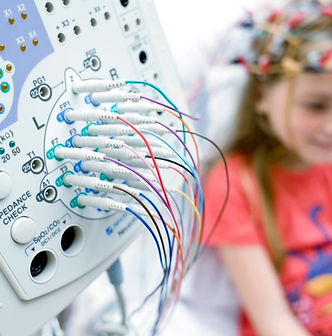
Quantitative EEG studies have found abnormal coherence patterns in children with autism (Coben et al., 2008), which may contribute to sensory hypersensitivity.
When brain regulation improves, sensory tolerance often improves.
Not because behavior was forced.
But because the nervous system feels safer.
When Food Refusal Becomes More Than Sensory
Severe cases may overlap with Avoidant/Restrictive Food Intake Disorder (ARFID), especially when:
Weight loss occurs
Nutritional deficiencies appear
Fear of choking or vomiting develops
Entire food groups are eliminated
ARFID is increasingly recognized in neurodivergent populations.
Early intervention matters.
What Parents Can Do Right Now
While long-term regulation work is important, here are immediate supportive strategies:
1. Lower Sensory Load
Dim lighting
Reduce background noise
Avoid strong food smells
Keep the table visually simple
2. Separate Foods
Avoid mixing textures until tolerance improves.
3. Maintain One Safe Food
Ensure at least one predictable option is available.
4. Reduce Pressure
Remove emotional intensity around eating.
Safety first. Expansion second.
Why does my autistic child gag at certain foods?
Gagging can occur due to sensory hypersensitivity. The brain may interpret certain textures as overwhelming or unsafe, triggering a neurological reflex.
⸻
Is food refusal behavioral or sensory?
In many children with autism, food refusal is sensory-based rather than behavioral. It is often a nervous system regulation issue.
⸻
Can sensory overload cause picky eating?
Yes. When sensory input feels intense, the brain seeks predictable foods to reduce stress.
⸻
Will sensory food issues improve with age?
Some children improve over time, but persistent severe sensory-based food restriction may require targeted intervention.
⸻
The Bigger Picture: Regulation Before Expansion
Instead of asking:
“How do we make them eat more foods?”
Ask:
“How do we help their nervous system feel safe?”
When the brain feels regulated:
• Anxiety decreases
• Flexibility increases
• Sensory tolerance improves
• Food expansion becomes possible
⸻
Supporting Families at Reign-Bow Brain Treatment Center
At Reign-Bow Brain Treatment Center, we approach sensory challenges through a neurological lens.
Using qEEG brain mapping and neuromodulation-informed care, we focus on:
• Identifying dysregulated brain patterns
• Supporting nervous system stability
• Improving sensory integration
• Enhancing emotional regulation
Because mealtime shouldn’t feel like a battlefield.
It should feel manageable, we can help you explore whether neurological regulation may be part of the picture.
📞 Schedule a consultation
🧠 qEEG Brain Mapping Available
📍 Serving Chicagoland Families


Comments