


How TMS Therapy Promotes Social Integration in Autism and Neurodevelopmental Conditions
- 20 hours ago
- 4 min read
Social integration is more than just making friends. It involves the brain’s ability to regulate emotions, interpret social cues, tolerate sensory input, and respond appropriately in dynamic environments like classrooms, workplaces, and community settings.
For many individuals on the autism spectrum, these functions are neurologically based — not behavioral choices.
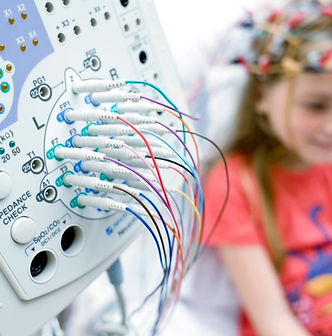
At Reign-Bow Brain Treatment Center, we utilize qEEG-guided neuromodulation (TMS/MeRT) to address the underlying brainwave patterns associated with social communication challenges.
Let’s explore how.
Understanding the Brain and Social Integration
Social integration requires coordinated activity between several key brain regions:
Prefrontal Cortex – executive function, impulse control, social judgment
Temporal Lobes – language processing and social cue interpretation
Anterior Cingulate Cortex – emotional regulation
Mirror Neuron Networks – empathy and imitation learning
Research shows that many individuals with autism demonstrate:
Excess delta and theta wave activity (slow-wave dominance)
Reduced beta activity in frontal regions
Connectivity irregularities between hemispheres
Dysregulation in networks involved in language and executive function
A 2014 review in the journal Brain Stimulation found that noninvasive neuromodulation can positively influence cortical excitability and connectivity patterns associated with social cognition.
This matters — because social difficulty is often a brain regulation issue, not a motivation issue.
What Is TMS and How Does It Work?
Transcranial Magnetic Stimulation (TMS) uses magnetic pulses to stimulate targeted brain regions. At Reign-Bow Brain Treatment Center, protocols are guided by quantitative EEG (qEEG) brain mapping to individualize frequency and placement.
Unlike medication, TMS:
Does not circulate systemically
Does not require sedation
Is non-invasive
Targets specific cortical networks
When delivered in a structured 6–8 week protocol, TMS can:
Improve cortical timing
Reduce excess slow-wave activity
Enhance frontal lobe regulation
Improve network synchronization
Improved regulation often translates into measurable functional gains.
How Brain Regulation Improves Social Integration
1. Emotional Regulation Improves Peer Interaction
Children who previously experienced:
Meltdowns
Rigid thinking
Overreactions to minor changes
May show improvements in flexibility and tolerance as frontal regulation stabilizes.
Parents often report:
Increased ability to transition between activities
Reduced intensity of emotional outbursts
Improved classroom participation
Emotional stability allows social engagement to become less overwhelming.
2. Improved Processing Speed Enhances Conversation
Excess delta activity can slow cognitive processing. When cortical rhythms are optimized:
Response latency may decrease
Language retrieval may improve
Reciprocal conversation may become more fluid
This supports better back-and-forth social exchange — a key marker of integration.
3. Sensory Regulation Reduces Social Withdrawal
Many individuals with autism avoid social settings due to:
Auditory hypersensitivity
Visual overstimulation
Environmental overwhelm
Neuromodulation can help stabilize sensory processing networks, leading to:
Greater tolerance of school environments
Participation in sports and group activities
Increased comfort in public settings
At Reign-Bow Brain Treatment Center, we frequently see patients expand into new social environments once nervous system hyperarousal decreases.
4. Executive Function Gains Support Independence
Social integration also means:
Dressing appropriately for weather
Participating in extracurricular activities
Following multi-step directions
Adapting to changing routines
Improved frontal lobe activation can enhance:
Planning
Behavioral inhibition
Task initiation
Cognitive flexibility
When executive function improves, independence follows — and independence promotes integration.
What the Research Says
Emerging literature suggests:
TMS may reduce repetitive behaviors
TMS may improve language output
TMS may enhance cortical connectivity
TMS may modulate gamma and beta oscillations associated with social cognition
A study published in Journal of Autism and Developmental Disorders reported improvements in executive functioning following repetitive TMS targeting the dorsolateral prefrontal cortex.
While research is ongoing, clinical observations continue to show promising functional improvements in social engagement and adaptive behavior.
Why Brain-Based Intervention Matters
Traditional therapies often focus on behavioral training.
Behavioral therapy is important — but if the brain is dysregulated, learning can be limited.
When we improve the neurological foundation:
Behavioral therapy becomes more effective
Learning retention improves
Social cues are processed more accurately
Emotional responses become less reactive
Neuromodulation does not replace therapy — it enhances the brain’s ability to benefit from it.
A Functional Outcome Approach
At Reign-Bow Brain Treatment Center, success is measured by functional integration:
Increased school participation
Improved peer relationships
Participation in sports or clubs
Greater adaptability to seasonal changes and routines
Reduction in socially isolating behaviors
Social integration is not just about talking more — it is about engaging more confidently with the world.
Final Thoughts
Social challenges in autism are neurologically mediated.
TMS and qEEG-guided neuromodulation offer a science-based approach to improving cortical regulation, executive function, and emotional stability — all foundational components of social integration.
As research continues to evolve, individualized neuromodulation may become an increasingly valuable component of comprehensive autism care.
Take the Next Step Toward Social Confidence
If your child struggles with emotional regulation, peer interaction, sensory overwhelm, or social communication, there may be an underlying neurological component contributing to those challenges.
At Reign-Bow Brain Treatment Center, we utilize qEEG brain mapping to objectively measure cortical activity and design individualized neuromodulation protocols tailored to your child’s specific brainwave patterns.
Social integration is not just about behavior — it is about brain regulation.
When the brain functions more efficiently:
Emotional responses stabilize
Processing speed improves
Flexibility increases
Social engagement becomes more natural
Early intervention matters. Objective data matters. Precision treatment matters.
Schedule a Brain Mapping Consultation
Let’s determine whether neuromodulation may be appropriate for your child.
📍 Reign-Bow Brain Treatment Center
📞 Call to schedule your consultation
🌐 Visit our website to learn more
🧠 Insurance select plans accepted
Because every child deserves the opportunity to engage confidently with the world around them.


Comments